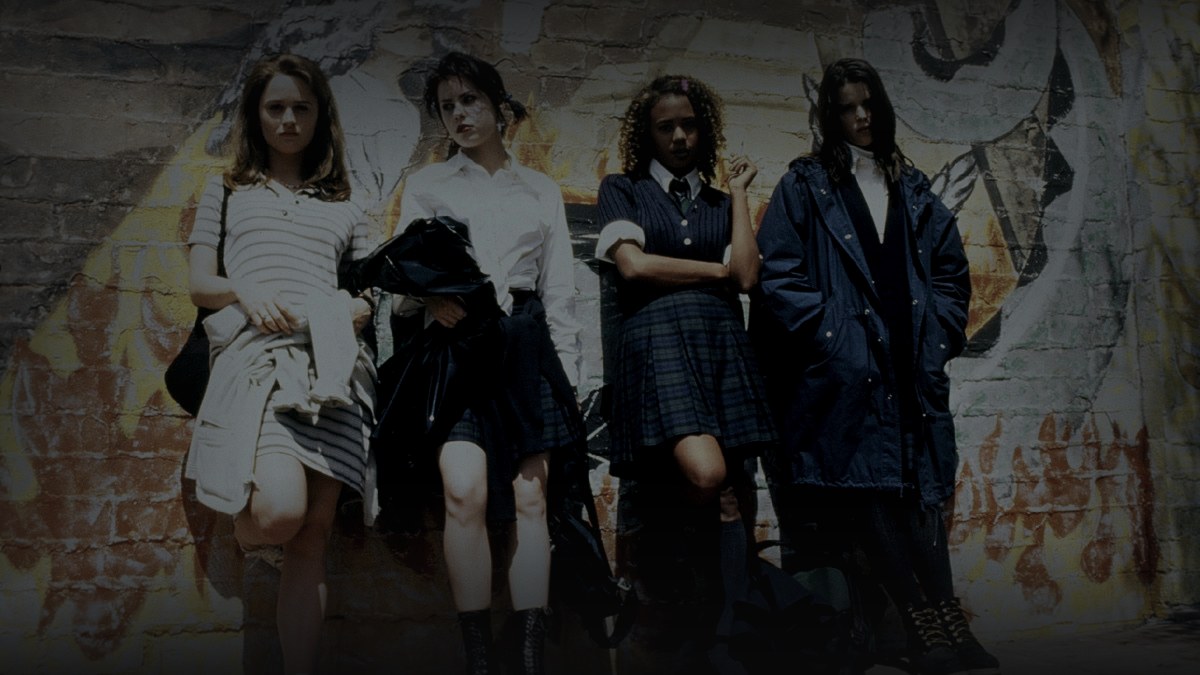
The Craft (1996)
A 1996 American supernatural horror film directed by Andrew Fleming and starring Robin Tunney, Fairuza Balk, Neve Campbell, and Rachel True. The film follows Sarah Bailey, a troubled teenager with unusual abilities who moves from San Francisco to Los Angeles and befriends a trio of outcast girls rumored to be witches. Together they form a coven of four, the number required by the earth deity they worship.
The Craft was theatrically released in the United States on May 3, 1996, by Columbia Pictures. It received mixed reviews from mainstream critics at the time but developed a devoted following on home video and cable, where it found the audience the theatrical release missed. The film is a foundational text of the late-1990s teen-witch cycle that would, ten years later, inspire a direct sequel and a wave of similar television shows.
What the film does
Sarah Bailey is a high school transfer with a history of self-harm and a psychic streak she cannot explain. At her new Catholic school in Los Angeles she meets three outcast girls who, separately and together, practice a form of Wiccan witchcraft. Bonnie Harper bears the burn scars from a childhood accident, Nancy Downs lives in a trailer with an abusive stepfather, and Rochelle Zimmerman is enduring racist bullying from a group of white girls at school. The girls worship an earth deity called Manon. Sarah’s ability to levitate a pencil in class convinces them that she is the fourth member they need to complete the coven.
The first third of the film follows the four girls through the basic repertoire of teen witchcraft: a binding spell against a vagrant who frightened Sarah, a love spell on Chris Hooker (the jock who spread a rumor about Sarah), a curse on Laura Lizzie (the ringleader of the racist bullies), and a beauty spell for Bonnie’s scars. Each spell succeeds. The middle of the film is the most enjoyable sequence in the canon of late-1990s teen supernatural horror: the four girls in a darkened room, candles lit, chanting their intentions, and then the slow, deliberate payoff as the world rearranges itself around them.
The third act is the moral reckoning. Nancy’s power goes to her head. She attempts a fatal binding spell against a teacher she blames for her failures, and the coven’s bonds break under the weight of her ambition. Sarah confronts Nancy in a school restroom, and the final sequence is a one-on-one magical duel in which Sarah finally owns the power she has been running from throughout the film. Manon takes Nancy at the end. The film closes with Sarah at the airport, healed, alone, ready to fly home.
Why it’s in the canon
Criteria blend is 1+3, loved it and want to remember it. The Craft is the rare studio horror film that takes its teenage protagonists seriously. The four leads are not interchangeable scream-queens or final-girl archetypes. Each of the four actresses plays a distinct kind of outsider, and the film lets each of them have a turn at the camera before the climax. Fairuza Balk is the standout: her Nancy Downs is the most charismatic villain in 1990s teen horror, the kind of character you cannot look away from even when you know exactly what she is going to do. Robin Tunney holds the film together as Sarah, the only character who grows.
The film is also a structural achievement. The first three acts each have their own internal logic and visual register. The binding spells in the first act are shot like a heist sequence, deliberate and almost comic. The love spell sequence is the visual peak of the film, the four of them in Sarah’s bedroom with the camera tracking them through the ritual, the lighting shifting as the spell takes hold. The third act is the studio-horror set pieces, but the film’s commitment to the four-character ensemble carries it through. Andrew Fleming directs with a clean visual palette of teal-and-amber interiors, and the Los Angeles Catholic- school setting grounds the supernatural material in a specific place and class context.
The Craft is, finally, a soundtrack film. The 1996 release made extensive use of the late-1990s alt-rock boom: Elastica, Jesus Jones, Sponge, Spacehog, Suede. The music supervisor’s choices are unusually integrated into the emotional arc of the film. The spells land harder because the music lands harder. For viewers who came of age in the mid-1990s, the soundtrack is half the reason the film still works. For viewers who came after, the soundtrack is a window into a particular American moment: suburban catholic schools, mall goth, the brief window when teen witchcraft was both mainstream counterculture and a credible box-office bet.
The DVD is a 1990s Columbia release picked up secondhand. The film holds up as both a horror film and a 1990s time capsule, and the DVD is the canonical home-video version of record.
A note on the image
The hero image is a 16:9 still from Letterboxd showing the four leads. The source is a daylight interior, baked at factor 0.45 to output brightness 42.9, slightly above the 25-35 daylight target. The brighter-than-canonical bake is acceptable for this film because the source is a high-key daylight scene; the rest of the canon’s daylight range (25-35) would land the image noticeably darker than the rest of the cast photo. The bake was not re-tried at a lower factor because the 0.45 result is visually within canon tolerances.
On hand
Yes, DVD only. No digital or download. A late-1990s Columbia DVD release picked up secondhand.
image: 16:9 still from Letterboxd (the 1200x675 crop variant), baked through scripts/bake_dark_photo.py at default factor 0.45, output brightness 42.9