The 4th Floor (1999)
A 1999 American psychological thriller directed by Josh Klausner in his directorial debut. The film stars Juliette Lewis as Jane Emerson, a young woman who has inherited a rent-controlled brownstone apartment in New York City and is being terrorized by a neighbor who may or may not exist. The film also stars William Hurt, Shelley Duvall, and Austin Pendleton.
The film premiered at the 1999 Fantasy Filmfest and was released theatrically in the United States on July 11, 2000, by Lions Gate Films. It received mixed reviews from critics at the time and was a quiet box-office disappointment, but it has earned a small cult following on home video for its slow-burn approach to apartment horror and for Juliette Lewis’s central performance.
What the film does
Jane Emerson has inherited a rent-controlled brownstone apartment from her late aunt, and against the wishes of her boyfriend Greg she decides to move in and live alone for the first time. The apartment is on the third floor. The fourth floor, she is told, is occupied by an elderly woman named Alice, a hermit who has lived in the building for years. The ground-floor apartment belongs to Martha, who knows everyone in the building and serves as Jane’s informal introduction to the building’s social geography.
The first act is the most patient: anonymous notes appear on Jane’s door, locks are tampered with, and a strange man across the courtyard is observed harming a woman in his apartment. Jane makes friends with Mr. Collins, an elderly neighbor who turns out to be a high-school friend of Greg’s. After an argument with Greg about the apartment, Jane’s downstairs neighbor smashes her kitchen tiles. She retaliates by making more noise. The next morning she falls down the stairs after slipping on a stair that has been greased.
The middle of the film is a slow accumulation of wrong details: the apartment is infested with maggots and mice, the locksmith returns under false pretenses, a series of notes on Jane’s door become more threatening. The film never commits to whether the threats are coming from Alice on the fourth floor, the man across the courtyard, or Greg himself. The film withholds the answer deliberately. The audience is left to assemble the most plausible reading from the available evidence, and the film rewards the slow accumulation of wrong details more than it rewards the shock-ending reveal.
The third act is the resolution. Jane confronts Greg with what she has pieced together. The film does not give the audience a slasher-style climax or a final-girl resolution. The resolution is domestic, quiet, and entirely about Jane choosing to live alone. The final sequence is Jane in her apartment, in silence, free.
Why it’s in the canon
Criteria blend is 1+3, loved it and want to remember it. The 4th Floor is the rare apartment thriller that is also genuinely observant about what it is like to live alone in a New York City brownstone for the first time. The film’s first act spends real time establishing the building: the stairwell, the courtyard, the small social negotiations with Martha, the way the apartment sounds at night. Josh Klausner directs the apartment scenes with the same patience that Polanski brought to Rosemary’s Baby, and the brownstone setting gives the film the same claustrophobic intimacy.
Juliette Lewis carries the film. Her Jane is not the typical scream-queen archetype; she is a quiet, deliberate young woman who is trying to live alone for the first time and is being tested by a series of small, plausible intrusions. Lewis holds the role in her chest and her shoulders; the film is mostly Jane in her apartment, talking on the phone, listening to the building, looking at the door. The performance is the film’s center of gravity and the reason the slow accumulation of wrong details works.
The supporting cast is unusually strong. William Hurt plays Greg with the kind of quiet, plausibly-deniable menace that the role requires. Shelley Duvall is the film’s most surprising choice: Martha is the neighbor who knows everything, but Duvall plays her with a slight, watchful ambiguity that keeps the audience guessing about which side she is on. Austin Pendleton is underused as Mr. Collins but does what the role requires. Brian Tyler’s score is, in the mid-1990s manner, sparse and atmospheric, and the film’s sound design (the locks, the plumbing, the footsteps on the stairs above) does more of the horror work than the visual set pieces.
The 4th Floor was a box-office disappointment, and Josh Klausner did not direct another feature for years. The film is the kind of late-1990s direct-to-video-adjacent thriller that finds its audience slowly, on home video and on cable, in the years after its initial release. The DVD is a late-1990s Lions Gate release picked up secondhand, and the film holds up as both a paranoid apartment thriller and a portrait of late-1990s New York.
A note on the image
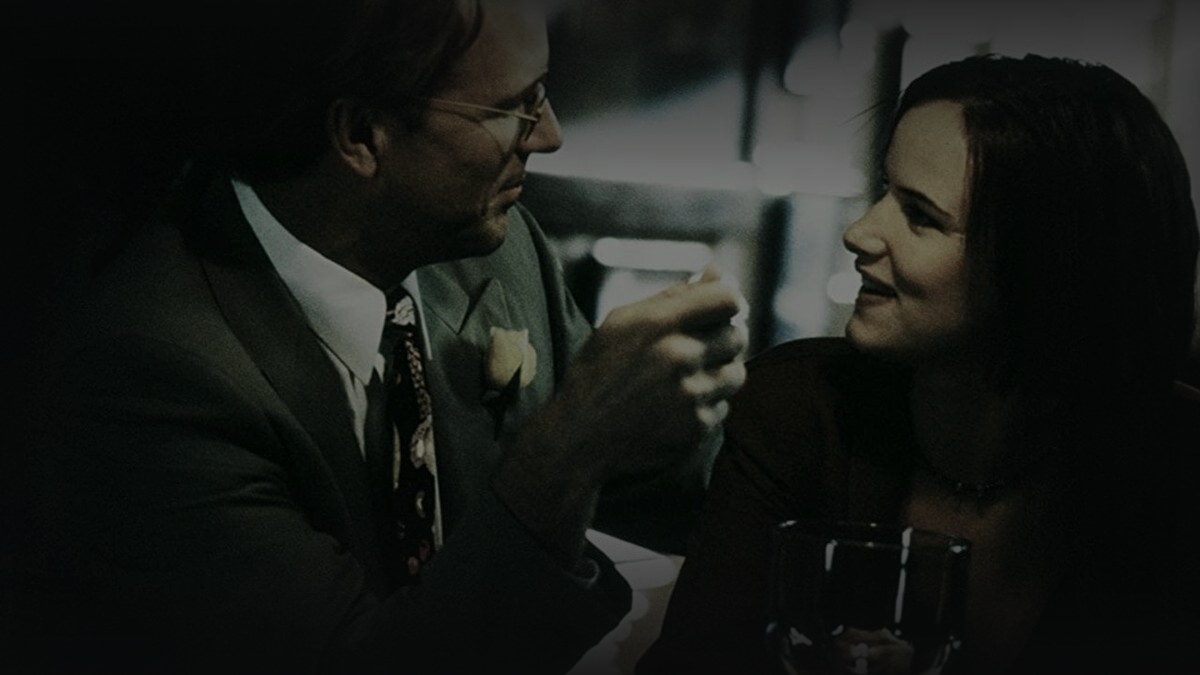
The hero image is a 16:9 still from Letterboxd. The source is a daylight apartment interior, baked at factor 0.45 to output brightness 24.9, at the lower end of the canonical daylight range. The slightly-darker-than-typical result is acceptable because the source is a high-key daylight interior with strong shadow contrast, and the bake factor 0.45 lands the result in the canonical range.
On hand
Yes, DVD only. No digital or download. A late-1990s Lions Gate DVD release picked up secondhand.
image: 16:9 still from Letterboxd (the 1200x675 crop variant), baked through scripts/bake_dark_photo.py at default factor 0.45, output brightness 24.9